1Introduction
The Model 871 is a series of phase-coherent, single or multi-channel, ultra-fast switching and ultra-low phase noise signal generators with a frequency range from 1 kHz to 12, 20, 40, and 51 GHz. It is ideally suited for a wide range of applications, where good signal quality, accurate and wide output power ranges, and very stable phase coherence among all channels are required. Outstanding phase noise is combined with good spurious, harmonic rejection and leading-edge switching speed of 5 µs.
A high-stability OCXO reference provides excellent frequency accuracy and stability. The generator accepts a wide range of external references including the commonly used 10 and 100 MHz for higher phase synchronization, and a flexible reference choice in the range of 1-250 MHz for those applications with customer- or system-specific reference frequencies. Moreover, the Model 871 features a pair of BNC-specific high-frequency CLK ports (3 GHz, one input and one output) that enables excellent phase synchronization among the outputs of multiple BNC instruments with similar ports.
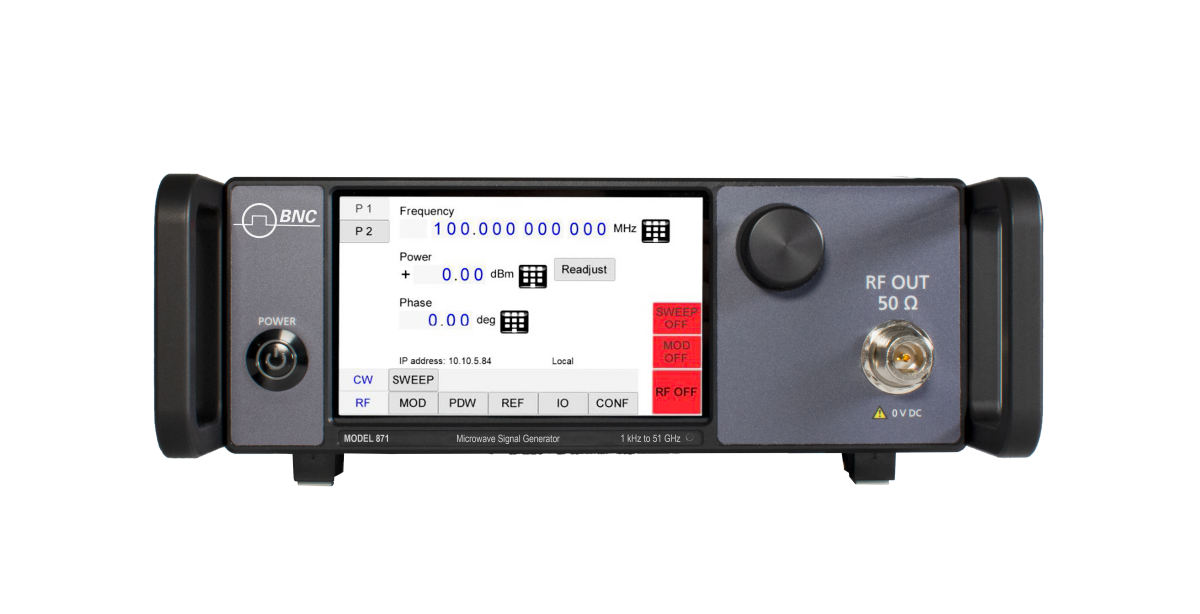
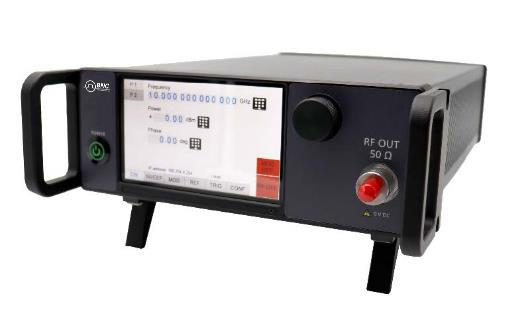
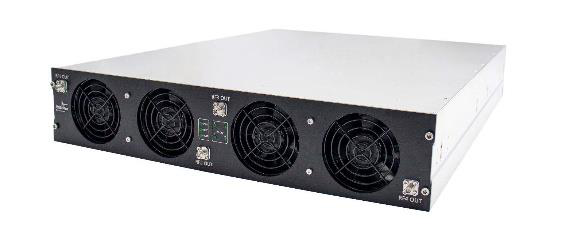
The Model 871 comes in a desktop enclosure (single-channel) or 19-inch 2U (up to 4 channels) rack-mountable module form. It can be intuitively controlled by a PC based GUI Software. Moreover, the instrument offers various communication interfaces like USB, LAN or GPIB. Each interface allows for easy and fast communication using SCPI 1999 command set. Remote control of the instrument can be quickly achieved from any host system. A customer-supplied application programming interface (API) or programming examples for MATLAB, LabVIEW, C++ and other commercially available tools make the control implementation very straightforward.
Definitions
The specifications in the following pages describe the warranted performance of the instrument for 23 ±5 °C after a 30-minute warm-up period.
- Typical: Expected mean values, not warranted performance.
- Min and Max: Parameter range that is guaranteed by product design, and/or production tested. Warranted performance specifications include guard-bands to account for the expected statistical performance distribution, measurement uncertainties, and changes in performance due to environmental conditions.
Features
- Wide & accurately leveled output power range
- Fast switching of 5 µs (option FS)
- Outstanding phase noise, harmonic, and spurious performance
- Sweep, trigger function, and user-programmable external reference frequency from 1 to 250 MHz
Applications
- ATE
- Production testing
- R&D low noise signal source
- Defense & Aerospace
2Signal Specifications
| Parameter | Min | Typical | Max | Note |
|---|---|---|---|---|
| Channels | 1 | 4 | ||
| Frequency Ranges | ||||
| 871-12 | 10 MHz | 12.75 GHz | ||
| 871-20 | 10 MHz | 20 GHz | ||
| 871-40 | 10 MHz | 40 GHz | ||
| 871-50 | 10 MHz | 51 GHz | ||
| 1 kHz | fmax | Option 1K | ||
| Resolution | <0.001 Hz | |||
| Phase Adjustment Range | 0 deg | 360 deg | Individually adjustable per channel | |
| Phase Resolution | 0.1 deg | |||
| Switching Time | Frequency > 10 MHz | |||
| CW Mode | 1.5 ms | After SCPI command received | ||
| Sweep/List Mode | 100 µs | |||
| 3 µs | 5 µs | Option FS | ||
| Thermal Drift | 0.015 dB / °C |
3Frequency Reference
| Parameter | Min | Typical | Max | Note |
|---|---|---|---|---|
| Internal Reference Frequency | ||||
| 100 MHz | ||||
| 10 MHz | Option LN(+) | |||
| Temperature stability 0 to 50 °C | ||||
| ±100 ppb | ||||
| ±20 ppb | Option LN(+) | |||
| Aging 1st year | ||||
| 1000 ppb | ||||
| 30 ppb | Option LN | |||
| 20 ppb | Option LN+ | |||
| Aging per day | ||||
| 5 ppb | After 30 days operations | |||
| 0.5 ppb | Option LN | |||
| < 0.5 ppb | Option LN+ | |||
| Warm-up time | 5 min | |||
| Output of internal reference | 1, 5, 10, 20, 25, 50, 100 MHz | REF OUT port High phase synchronous mode | ||
| Output of High Frequency Clock | 3 GHz | CLK OUT port High phase synchronous mode | ||
| Output Power | ||||
| +10 dBm | +13 dBm | 3 GHz | ||
| +5 dBm | +10 dBm | 1-100 MHz | ||
| Output Impedance | 50 Ohms | |||
| Phase lock to external reference | ||||
| 10, 100 MHz Integer MHz | STD or Option LN(+) Option VREF | |||
| 1 MHz | 250 MHz | High phase synchronous mode | ||
| High Frequency Clock Input (Bypass Internal References) | 3 GHz | CLK IN port High phase synchronous mode | ||
| Reference input level | ||||
| 1 to 250 MHz | -10 dBm | 0 dBm | +10 dBm | |
| 3 GHz | +10 dBm | +13 dBm | ||
| Lock Range | ||||
| LN(+), LN(+)+VREF | ±0.3 ppm | |||
| STD, STD+VREF | ±1.5 ppm | |||
| Reference Input Impedance | 50 Ω |
4Spectral Purity
Absolute SSB Phase Noise in dBc/Hz
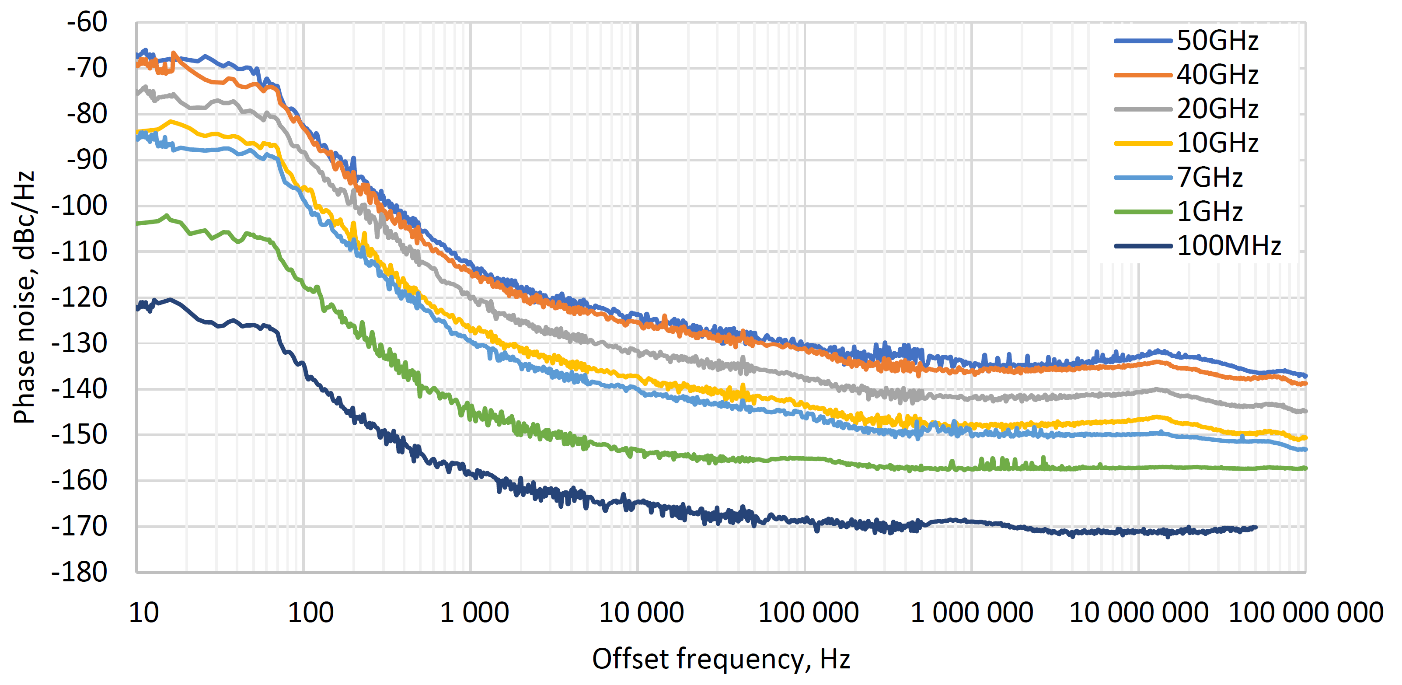
Specified values in plain text, typical values in brackets. CW, level = 10 dBm or maximum available output power, whichever is lower.
| Offset → Frequency ↓ | 10 Hz | 100 Hz | 1 kHz | 20 kHz | 100 kHz | 1 MHz | 10 MHz |
|---|---|---|---|---|---|---|---|
| 100 MHz | -100 (-105) | -130 (-135) | -154 (-159) | -150 (-155) | -156 (-161) | -156 (-161) | -156 (-161) |
| 1 GHz | -80 (-85) | -110 (-115) | -143 (-145) | -150 (-153) | -150 (-152) | -153 (-155) | -153 (-155) |
| 4 GHz | -68 (-73) | -98 (-103) | -132 (-135) | -144 (-147) | -147 (-150) | -153 (-156) | -153 (-155) |
| 10 GHz | -60 (-65) | -90 (-95) | -124 (-127) | -136 (-139) | -140 (-143) | -145 (-148) | -144 (-146) |
| 20 GHz | -54 (-59) | -84 (-89) | -118 (-121) | -130 (-133) | -134 (-137) | -139 (-142) | -138 (-140) |
| 40 GHz | -48 (-53) | -78 (-83) | -112 (-115) | -124 (-127) | -128 (-131) | -133 (-136) | -132 (-134) |
| 50 GHz | -46 (-51) | -76 (-81) | -110 (-113) | -122 (-127) | -126 (-129) | -131 (-134) | -130 (-132) |
Absolute SSB Phase Noise with LN(+) Option in dBc/Hz
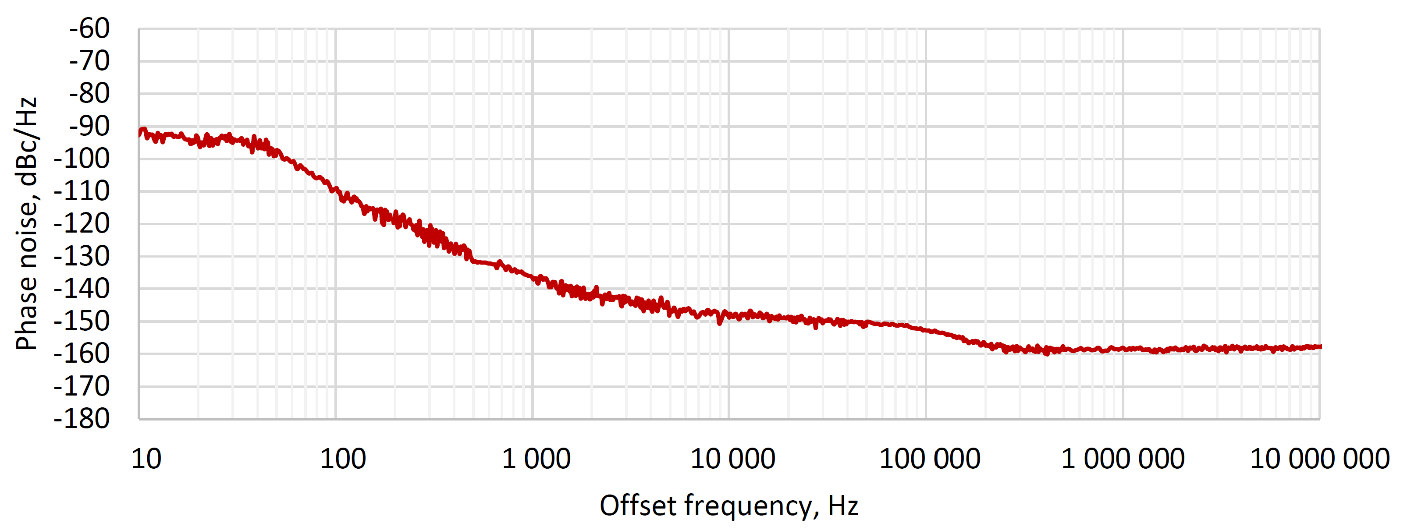
Specified values in plain text, typical values in brackets. CW, level = 10 dBm or maximum available output power, whichever is lower.
| Offset → Frequency ↓ | 10 Hz | 100 Hz | 1 kHz | 20 kHz | 100 kHz | 1 MHz | 10 MHz |
|---|---|---|---|---|---|---|---|
| 100 MHz | -120 (-123) | -130 (-135) | -154 (-159) | -150 (-155) | -156 (-161) | -156 (-161) | -156 (-161) |
| 1 GHz | -100 (-103) | -110 (-115) | -143 (-145) | -150 (-153) | -150 (-152) | -153 (-155) | -153 (-155) |
| 4 GHz | -88 (-91) | -98 (-103) | -132 (-135) | -144 (-147) | -147 (-150) | -153 (-156) | -153 (-155) |
| 10 GHz | -80 (-83) | -90 (-95) | -124 (-127) | -136 (-139) | -140 (-143) | -145 (-148) | -144 (-146) |
| 20 GHz | -74 (-77) | -84 (-89) | -118 (-121) | -130 (-133) | -134 (-137) | -139 (-142) | -138 (-140) |
| 40 GHz | -68 (-71) | -78 (-83) | -112 (-115) | -124 (-127) | -128 (-131) | -133 (-136) | -132 (-134) |
| 50 GHz | -66 (-69) | -76 (-81) | -110 (-113) | -122 (-127) | -126 (-129) | -131 (-134) | -130 (-132) |
5Phase Noise & Jitter
Harmonics, Subharmonics, Non-Harmonics
| Parameter | Min | Typical | Max | Note |
|---|---|---|---|---|
| Harmonics | At +10 dBm output power | |||
| 1 kHz to 350 MHz | -35 dBc | -30 dBc | ||
| 350 MHz to 8 GHz | -60 dBc | -50 dBc | ||
| 8 GHz to 22 GHz | -60 dBc | -55 dBc | ||
| 22 GHz to 30 GHz | -25 dBc | -20 dBc | ||
| 30 GHz to 51 GHz | -60 dBc | -50 dBc | ||
| Sub-Harmonics | At +10 dBm output power | |||
| 1 kHz to 350 MHz | -80 dBc | |||
| 350 MHz to 12.75 GHz | -75 dBc | -65 dBc | Incl. high-order subharmonics | |
| 12.75 GHz to 51 GHz | -70 dBc | -50 dBc | ||
| Non-Harmonic Spurious | 10 kHz to 0.5 GHz offset from carrier | |||
| 1 kHz to 350 MHz | -90 dBc | -80 dBc | ||
| 350 MHz to 4.5 GHz | -85 dBc | -80 dBc | ||
| 4.5 GHz to 12.75 GHz | -80 dBc | -75 dBc | ||
| 12.75 GHz to 25.5 GHz | -75 dBc | -70 dBc | ||
| 25.5 GHz to 51 GHz | -70 dBc | -65 dBc |
RMS Jitter
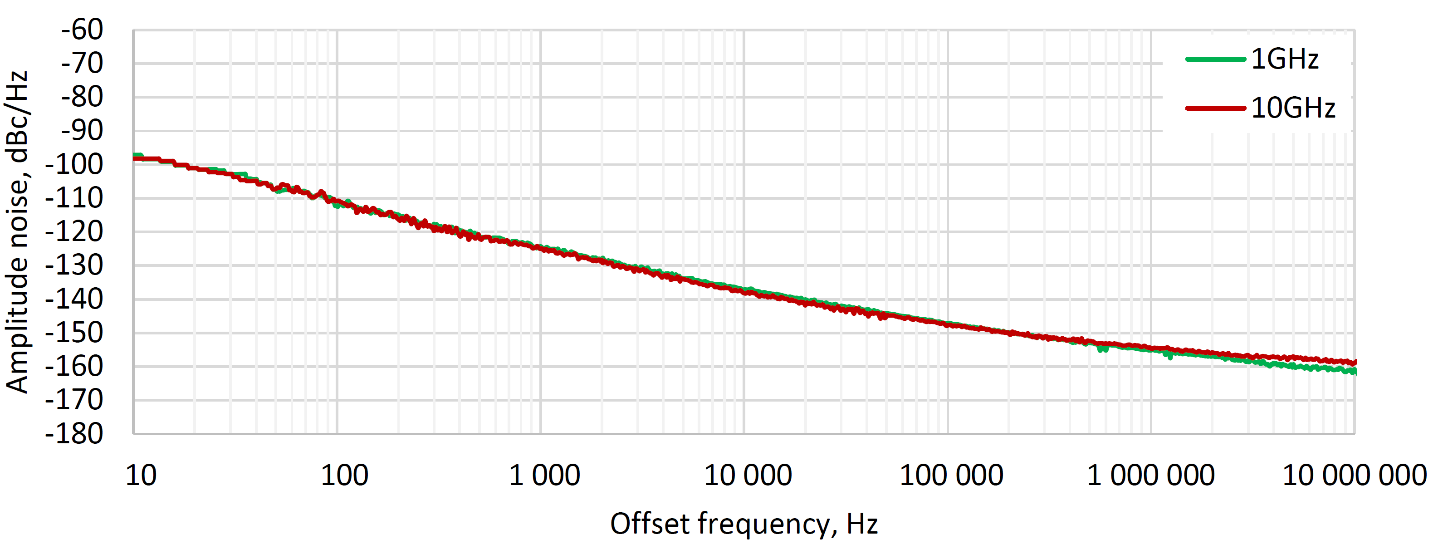
| Carrier Frequency | Min | Typical | Max | Note |
|---|---|---|---|---|
| 155 MHz | 11 fs | 15 fs | BW 100 Hz to 1.5 MHz | |
| 622 MHz | 8.5 fs | 10 fs | BW 1 kHz to 5 MHz | |
| 1 GHz | 15 fs | 20 fs | BW 10 Hz to 10 MHz | |
| 2.488 GHz | 8.5 fs | 10 fs | BW 5 kHz to 20 MHz | |
| 9.952 GHz | 8.5 fs | 10 fs | BW 10 kHz to 80 MHz |
6Harmonics & Spurious
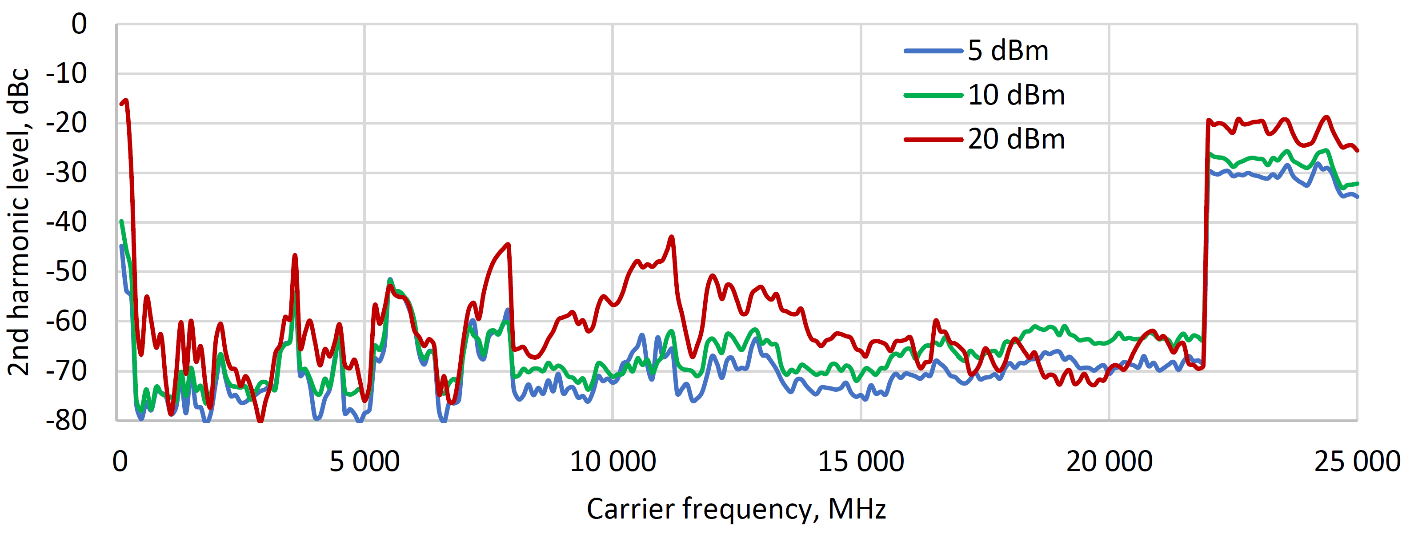
Harmonic, subharmonic, and non-harmonic spurious specifications are detailed in Phase Noise & Jitter above. The plots here characterize 2nd and 3rd harmonic levels across output power and carrier frequency.
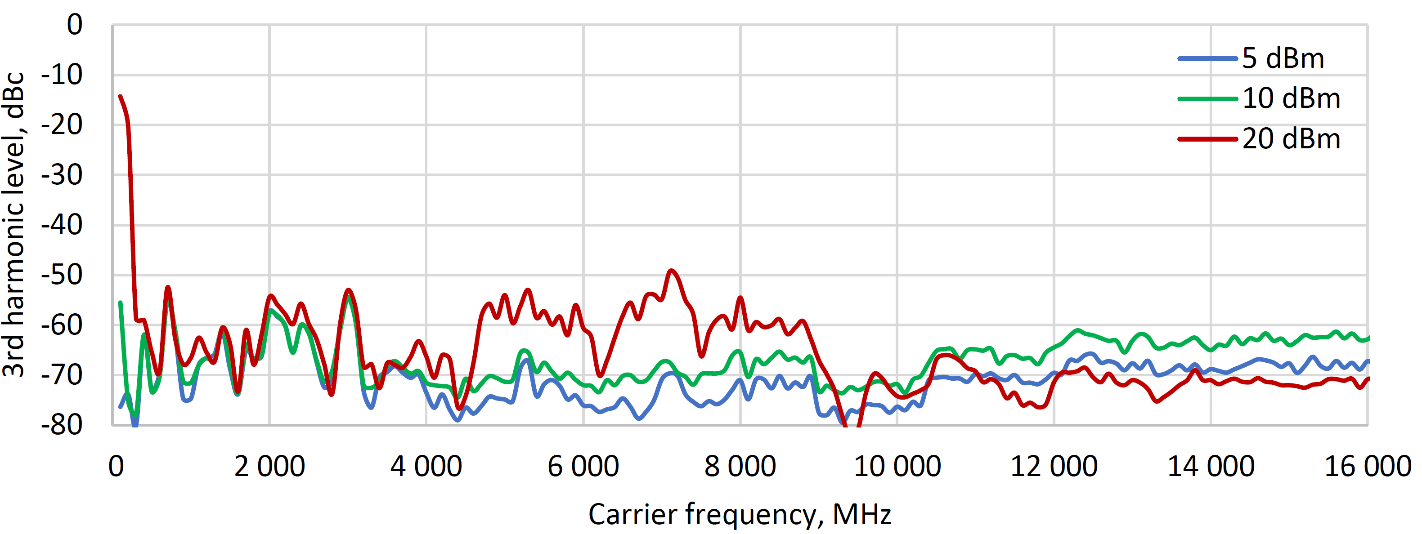
Levels are referenced to the carrier in dBc across the full carrier-frequency range.
7Level Performance
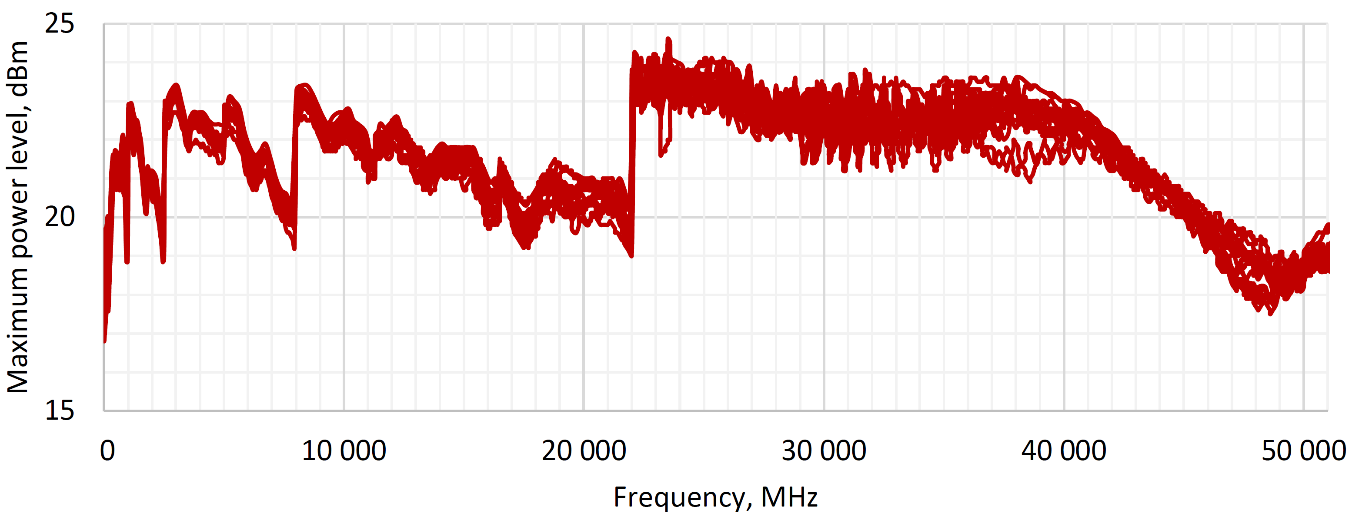
| Parameter | Min | Typical | Max | Note |
|---|---|---|---|---|
| Output Power Level | ||||
| 1 kHz to 1 MHz | -20 dBm | +10 dBm | ||
| 1 MHz to 10 MHz | -20 dBm | +12 dBm | ||
| 10 MHz to 2.5 GHz | -20 dBm | +18 dBm | ||
| 2.5 GHz to 44 GHz | -20 dBm | +19 dBm | ||
| 44 GHz to 51 GHz | -20 dBm | +15 dBm | ||
| Output Power Level | Option PE2 | |||
| 1 kHz to 1 MHz | -120 dBm | +10 dBm | ||
| 1 MHz to 10 MHz | -120 dBm | +12 dBm | ||
| 10 MHz to 2.5 GHz | -120 dBm | +16 dBm | ||
| 2.5 GHz to 44 GHz | -120 dBm | +18 dBm | ||
| 44 GHz to 51 GHz | -110 dBm | +12 dBm | ||
| Power Resolution | 0.01 dB | |||
| Reverse Power Protection | ||||
| DC Voltage | 0 V | |||
| RF Power | 26 dBm | |||
| Output Impedance | 50 Ohms | |||
| VSWR | ||||
| 1.3 | 1.5 | <15 GHz | ||
| 1.6 | 1.8 | 15 to 35 GHz | ||
| 1.9 | 2.2 | > 35 GHz |
8Power Level Error
Power Level Error
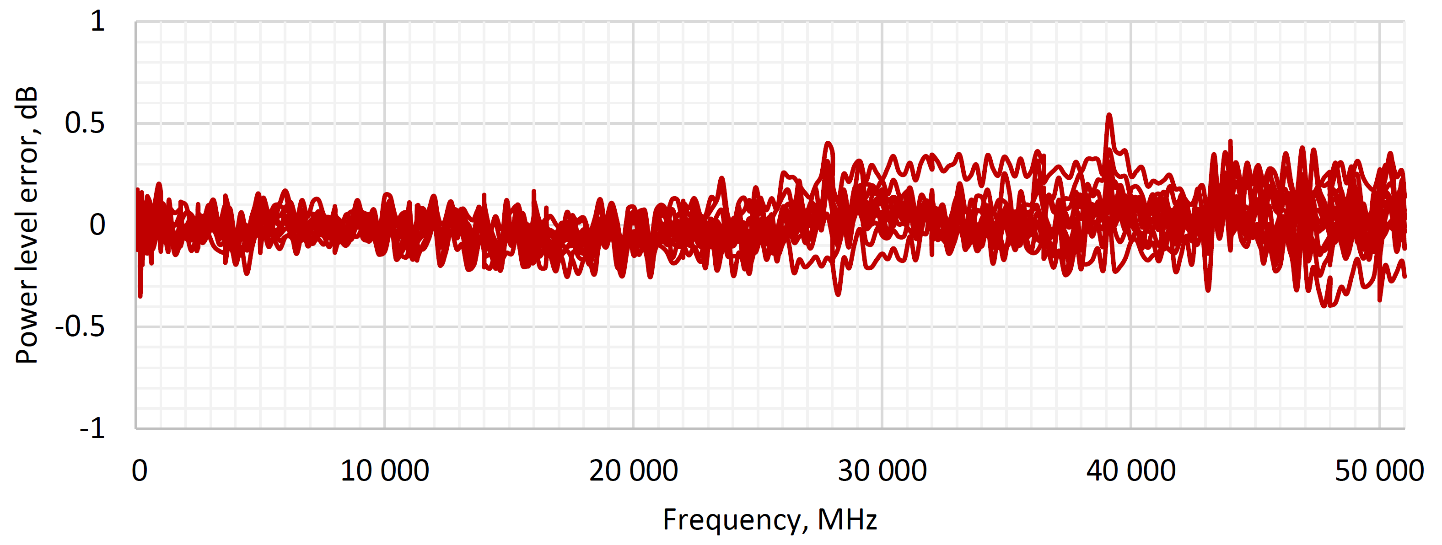
Specified values in plain text, typical values in brackets.
| Frequency Range | -110 to -50 dBm Option PE2 | -50 to -15 dBm Option PE2 | -15 to +15 dBm | +15 dBm to Max Power |
|---|---|---|---|---|
| 1 kHz to 10 MHz | 2.0 dB | 1.2 dB | 1 dB (0.5 dB) | 1.3 dB |
| 10 MHz to 1 GHz | 2.0 dB | 1.3 dB | 0.8 dB (0.15 dB) | 1.3 dB |
| 1 to 22 GHz | 2.0 dB | 1.8 dB | 0.5 dB (0.2 dB) | 2.0 dB |
| 22 to 42 GHz | 2.3 dB | 2.0 dB | 1.2 dB (0.4 dB) | 2.0 dB |
| 42 to 51 GHz | 2.5 dB | 2.0 dB | 1.3 dB (0.4 dB) | 2.5 dB |
Relative Power Level Error (0.1 dB steps)
Specified values in plain text, typical values in brackets.
| Frequency Range | -110 to -50 dBm Option PE2 | -50 to -15 dBm Option PE2 | -15 to +15 dBm | +15 dBm to Max Power |
|---|---|---|---|---|
| 1 kHz to 10 MHz | 2.0 dB | 1.2 dB | 1 dB (0.5 dB) | 1.3 dB |
| 10 MHz to 1 GHz | 2.0 dB | 1.3 dB | 0.8 dB (0.15 dB) | 1.3 dB |
| 1 to 22 GHz | 2.0 dB | 1.8 dB | 0.5 dB (0.2 dB) | 2.0 dB |
| 22 to 42 GHz | 2.3 dB | 2.0 dB | 1.2 dB (0.4 dB) | 2.0 dB |
| 42 to 51 GHz | 2.5 dB | 2.0 dB | 1.3 dB (0.4 dB) | 2.5 dB |
Relative Power Level Error (0.1 dB step)
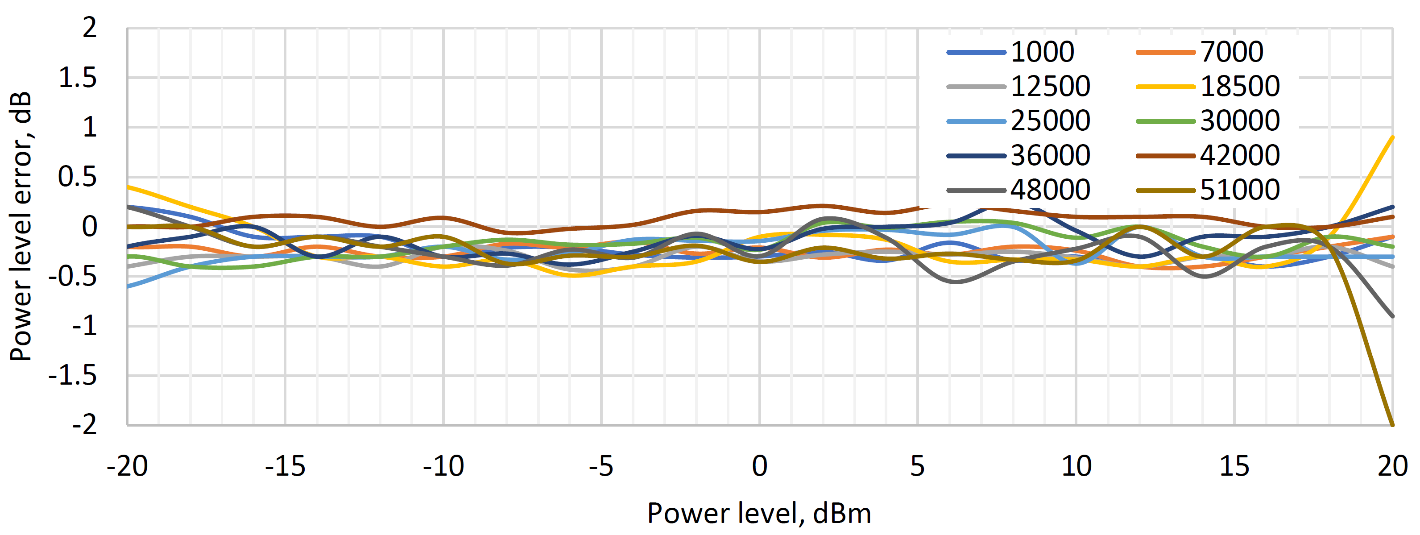
Specified values in plain text, typical values in brackets.
| Frequency Range | -110 to -50 dBm Option PE2 | -50 to -15 dBm Option PE2/PE4 | -15 to +15 dBm | +15 dBm to Max Power |
|---|---|---|---|---|
| 1 kHz to 10 MHz | (< 0.1 dB) | 0.5 dB (< 0.1 dB) | 0.5 dB (< 0.1 dB) | (< 0.1 dB) |
| 10 MHz to 1 GHz | (< 0.1 dB) | (< 0.1 dB) | (< 0.1 dB) | (< 0.1 dB) |
| 1 to 51 GHz | (< 0.1 dB) | (< 0.1 dB) | (< 0.1 dB) | (< 0.1 dB) |
9Modulation Capabilities
Pulse Modulation
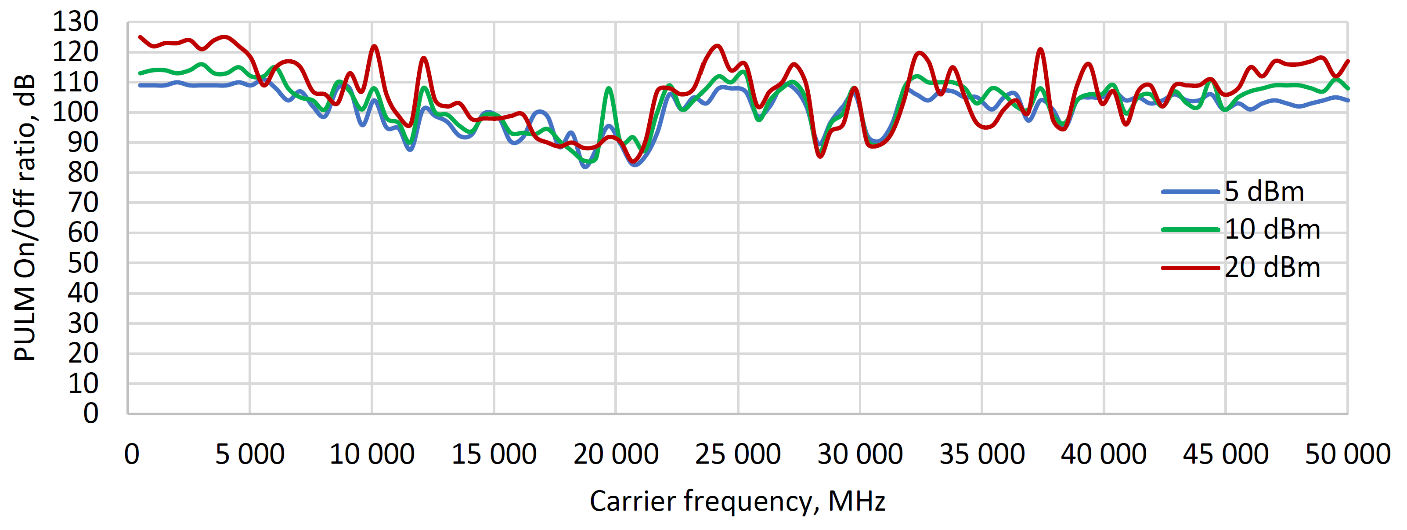
| Parameter | Min | Typical | Max | Note |
|---|---|---|---|---|
| Pulse Modulation | Option Pulse | |||
| Modulation Source | Internal / external | |||
| External input amplitude | TTL | |||
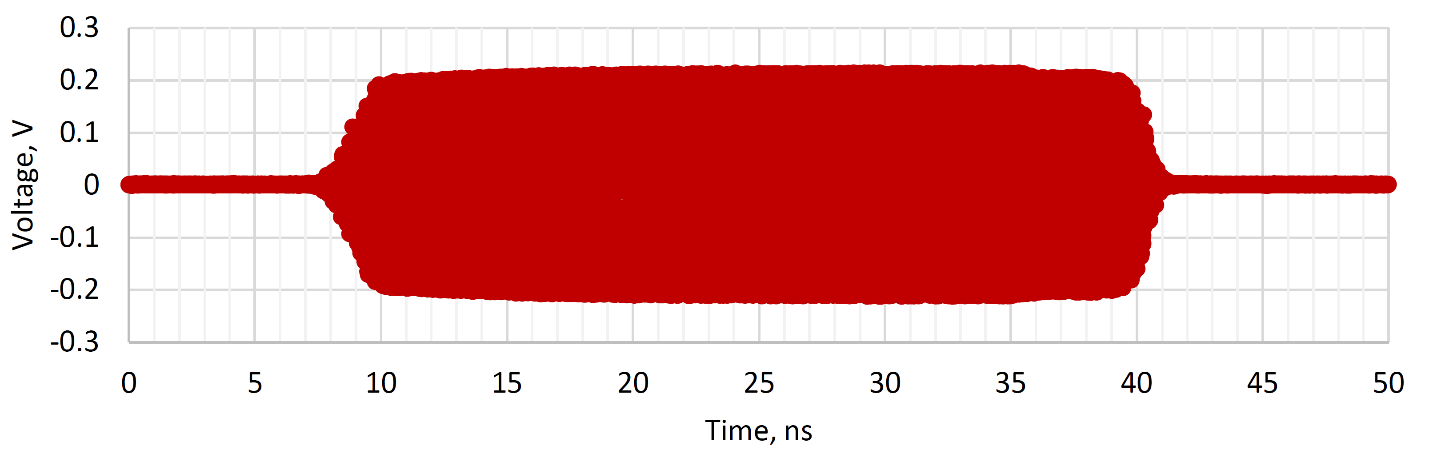
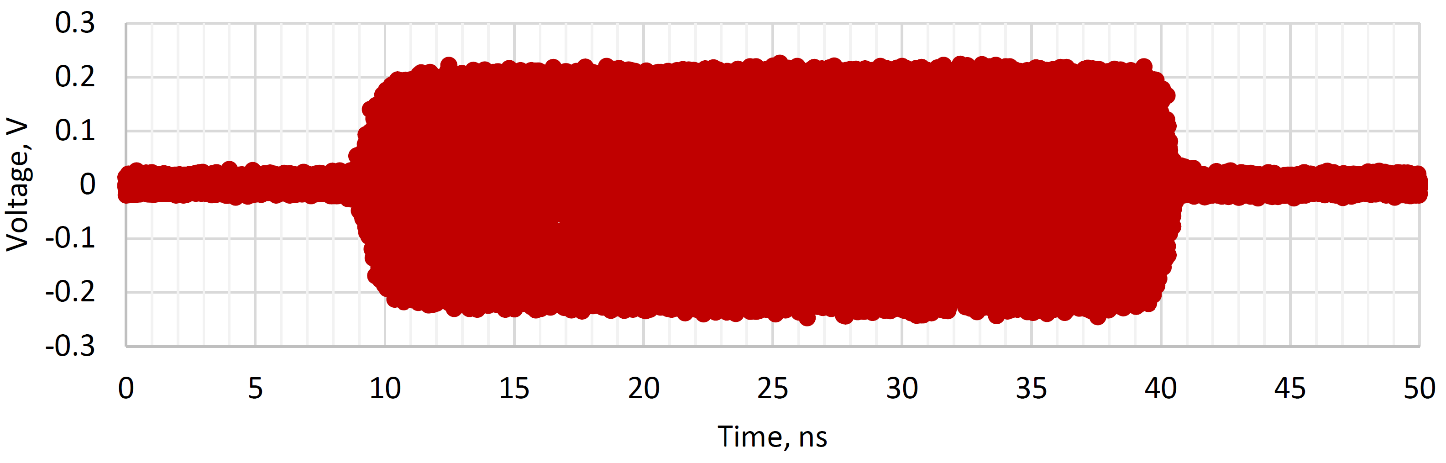
| Pulse rise/fall time | 3 ns | 5 ns | ||
| On/off ratio (power>=+5 dBm) | 80 dB | 95 dB | ||
| Pulse overshoot | 10% | |||
| Pulse delay | 20 ns | |||
| Pulse polarity | Normal, inverse | Selectable |
Internal Pulse Generator
| Parameter | Min | Typical | Max | Note |
|---|---|---|---|---|
| Repetition Frequency (PRF) | 0.1 Hz | 50 MHz | = 1/T | |
| Duty Cycle | 1% to 99% in 1% steps | Within specified minimum pulse width | ||
| Pulse Pattern Modulation & Staggered PRF | Using internal pattern generator | |||
| Pulse width | 10 ns | 20 s | ||
| Programmable pattern length | 2 | 65536 | ||
| Duty cycle | 0.05% | 99.95% | ||
| Pulse width resolution | 5 ns | |||
| Pulse period (T) accuracy | 5·10-6·T+ 3ns | |||
| Pulse width accuracy | 5-6x T +5ns | |||
| Pulse jitter | 2 ns | 5 ns | ||
| Polarity | Selectable |
Amplitude Modulation
| Parameter | Min | Typical | Max | Note |
|---|---|---|---|---|
| Amplitude Modulation | Option MOD | |||
| Modulation source | Internal | |||
| Modulation depth | 0 | 100% | ||
| Depth accuracy | 0.05·Depth +2 | |||
| Depth resolution | 1% | |||
| Distortion (THD) | 3% | |||
| Modulation rate | DC | 30 kHz | ||
| Modulation waveforms |
Frequency Modulation
| Parameter | Min | Typical | Max | Note |
|---|---|---|---|---|
| Frequency Modulation | Option MOD | |||
| Modulation source | ||||
| Maximum frequency deviation (peak) | N·5 MHz | See Deviation Table Below | ||
| Deviation accuracy | 0.01·Dev +2Hz | |||
| Distortion (THD) | 3% | |||
| Modulation rate | DC | 30 kHz | ||
| Modulation waveforms | Sine |
Phase Modulation
| Parameter | Min | Typical | Max | Note |
|---|---|---|---|---|
| Phase modulation | Option MOD | |||
| Modulation source | ||||
| Phase deviation (peak) | N·100 rad | |||
| Deviation accuracy | 0.01·Dev +1 mrad | |||
| Modulation rate | DC | 30 kHz | ||
| Distortion (THD) | 3% | |||
| Modulation waveforms |
Deviation Table
| Output Frequency | N Value |
|---|---|
| 1 kHz to <350 MHz | 1 |
| 350 to <562.5 MHz | 1/16 |
| 562.5 to <1125 MHz | 1/8 |
| 1.125 to <2.25 GHz | 1/4 |
| 2.25 to <4.5 GHz | 1/2 |
| 4.5 to <12.75 GHz | 1 |
| 12.75 to <25.5 GHz | 2 |
| 25.5 to 51 GHz | 4 |
10Sweeping Capability
| Parameter | Min | Typical | Max | Note |
|---|---|---|---|---|
| Sweep Parameters | Frequency, power, phase, list | |||
| Sweep Type | Linear | |||
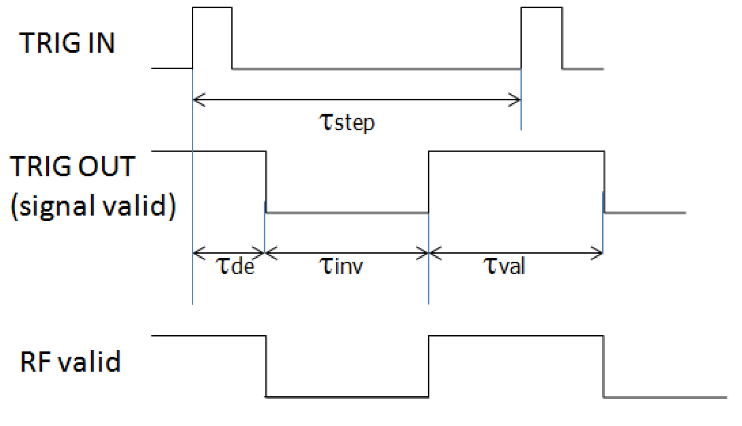
| Step time (tstep = tdwell + toff) | ||||
| 500 µs | 19998 s | |||
| 5 µs | 19998 s | Option FS | ||
| Dwell time (tdwell) | 0 µs | 9999 s | ||
| Off time (toff) | 0 µs | 9999 s | ||
| Time resolution | 5 ns | |||
| Timing delay (tde) | 50 ns | |||
| Transient time (tinv) | 5 µs | |||
| Timing accuracy per point | 5 ns | |||
| Number of points | 2 | 10000 | Per channel | |
11Trigger & Multi-Purpose Output
Trigger (TRIG IN)
| Parameter | Min | Typical | Max | Note |
|---|---|---|---|---|
| Trigger types | Continuous, Single (point), Gated, Gated, direction | |||
| Trigger source | External, Bus (LAN, USB) | |||
| Trigger modes | Continuous free run, Trigger and run, Reset and run | |||
| Trigger latency | 5 ns | |||
| Trigger uncertainty | 10 ns | |||
| External trigger delay | 50 ns | 40 s | settable | |
| External delay resolution | 5 ns | |||
| Trigger modulo | 1 | 255 | Execute only on Nth trigger event | |
| Trigger polarity | Rising, Falling | |||
| External trigger input threshold | 0.85 V | 0.9 V | 0.95 V | TTL compatible |
| External trigger input voltage range | -0.5 V | +5.5 V | TTL compatible | |
| External trigger input hysteresis | 60 mV | |||
Multi-Purpose Output (FUNC OUT)
| Parameter | Min | Typical | Max | Note |
|---|---|---|---|---|
| PULM VIDEO OUTPUT | ||||
| Output | CMOS | |||
| Period | 30 ns | 50 s | ||
| Pulse width | 15 ns | 50 s | ||
| RF delay | 10 ns | |||
| TRIGGER OUT Synchronization Mode for Multiple Sources | ||||
| Modes | Trigger on sweep start Trigger on each point Signal valid | |||
12Connectors
Single-Channel Front Panel (Desktop enclosure)
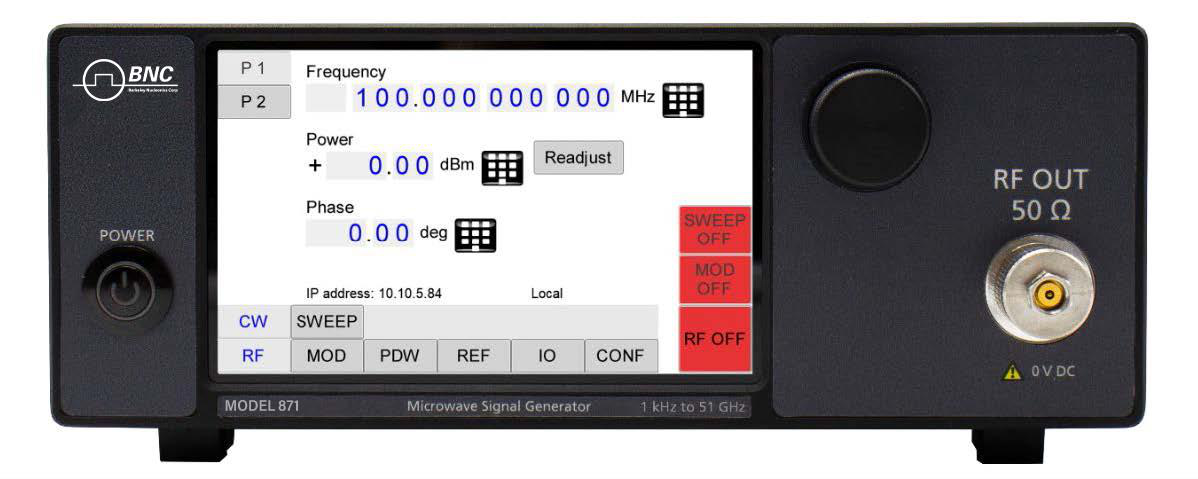
- Power switch
- Rotary knob
- RF outputs:
- 871-12/20: 3.5 mm male (female flange-mount optional)
- 871-40: 2.92 mm male hand-tight (female flange-mount optional)
- 871-50: 1.85/2.4 mm male hand-tight (female flange-mount optional)
Single-Channel Rear Panel (Desktop enclosure)
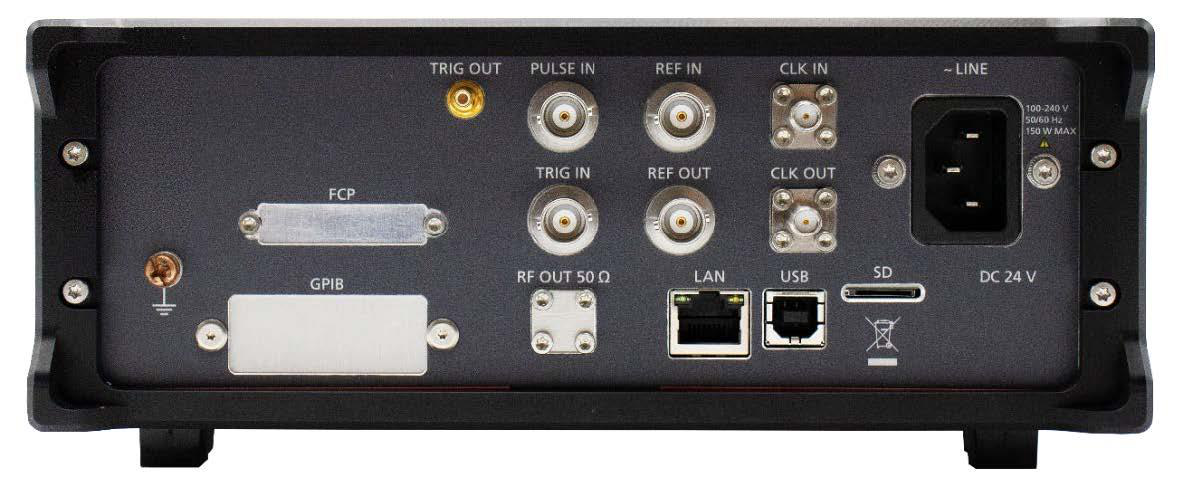
- Trigger output (TRIG OUT): BNC female
- PULSE IN: Pulse modulation input: BNC female
- Reference input (REF IN): BNC female
- High Stability Reference input (CLK IN, 3 GHz): SMA female
- Trigger input (TRIG IN): BNC female
- Reference output (REF OUT): BNC female
- High Stability Reference output (CLK OUT, 3 GHz): SMA female
- GPIB: IEEE-488.2, 1987 with listen and talk (optional)
- LAN connection: RJ-45
- USB 2.0 device
- Card slot (SD)
- 100-240V AC power plug
- Ground reference screw (earth) M4
Multi-Channel Front Panel (19" 2 U)
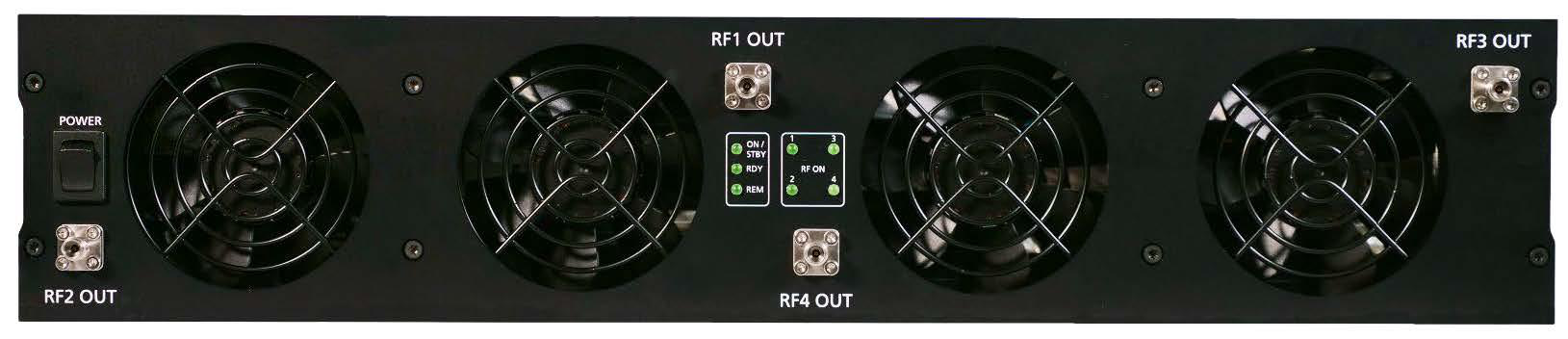
- RF outputs:
- 871-12/20: SMA female
- 871-40: 2.92 mm female
- 871-50: 1.85/2.4 mm female
Multi-Channel Rear Panel (19" 2 U)
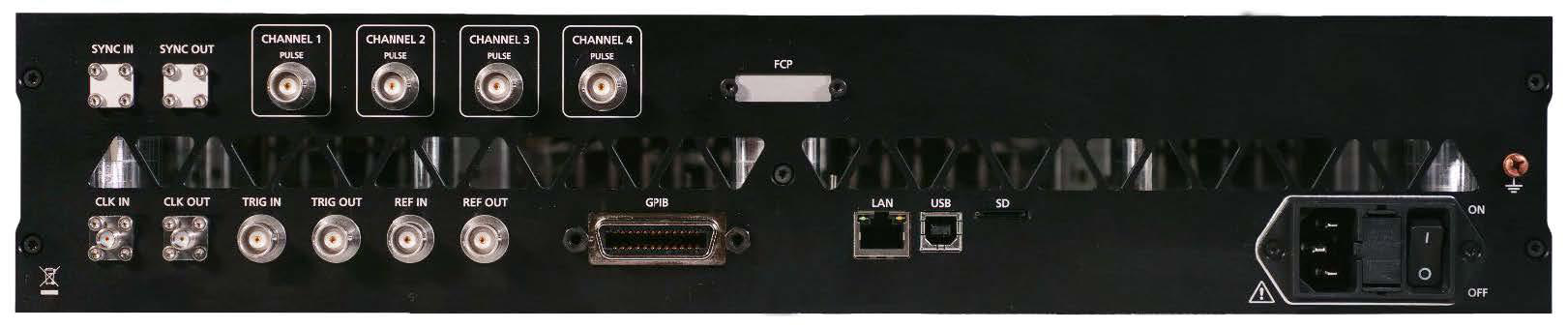
- Unit-to-unit synchronization signal input (SYNC IN): SMA female
- Unit-to-unit synchronization signal output (SYNC OUT): SMA female
- Channel 1, 2, 3, 4 PULM input: BNC female
- High Stability Reference input (CLK IN, 3 GHz): SMA female
- High Stability Reference output (CLK OUT, 3 GHz): SMA female
- Trigger input (TRIG IN): BNC female
- Trigger output (TRIG OUT): BNC female
- Reference input (REF IN): BNC female
- Reference output (REF OUT): BNC female
- GPIB: IEEE-488.2, 1987 with listen and talk (optional)
- LAN connection: RJ-45
- USB 2.0 device
- Card slot (SD)
- FUSE (3.15 A)
- 100-240V AC power plug
- Power switch
- Ground reference screw (earth) M4
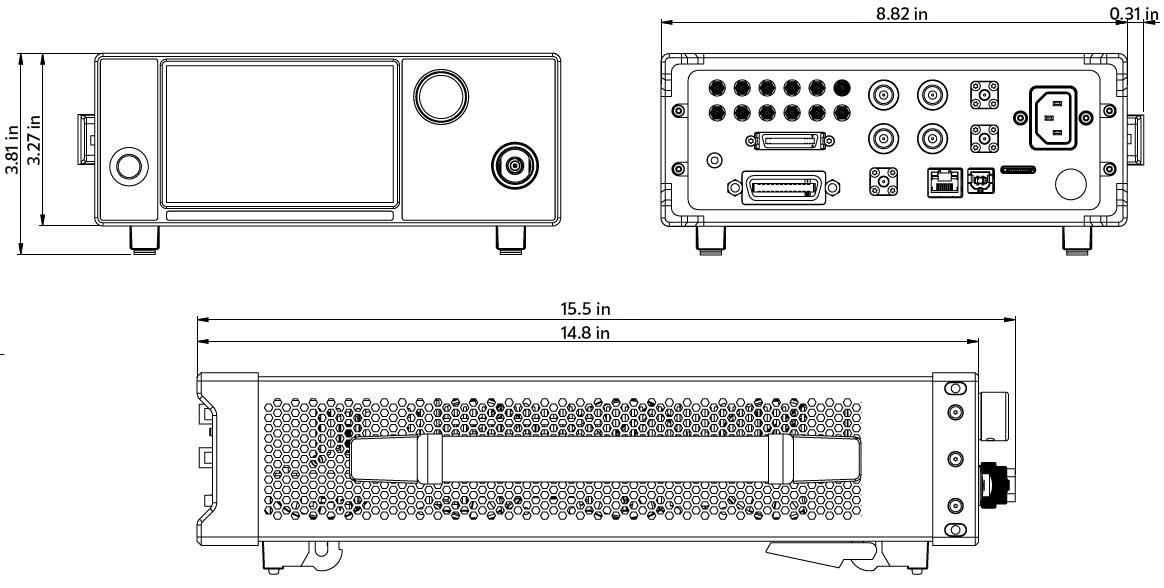
13Mechanical Specifications
Desktop enclosure: Dimensions & weight
| Including connectors | W x L x H = 9.1 x 15.5 x 3.8 in [232 x 393 x 96.75 mm], ≤22 lbs [10 kg] |
Rackmount 19" 2 U: Dimensions & Weight
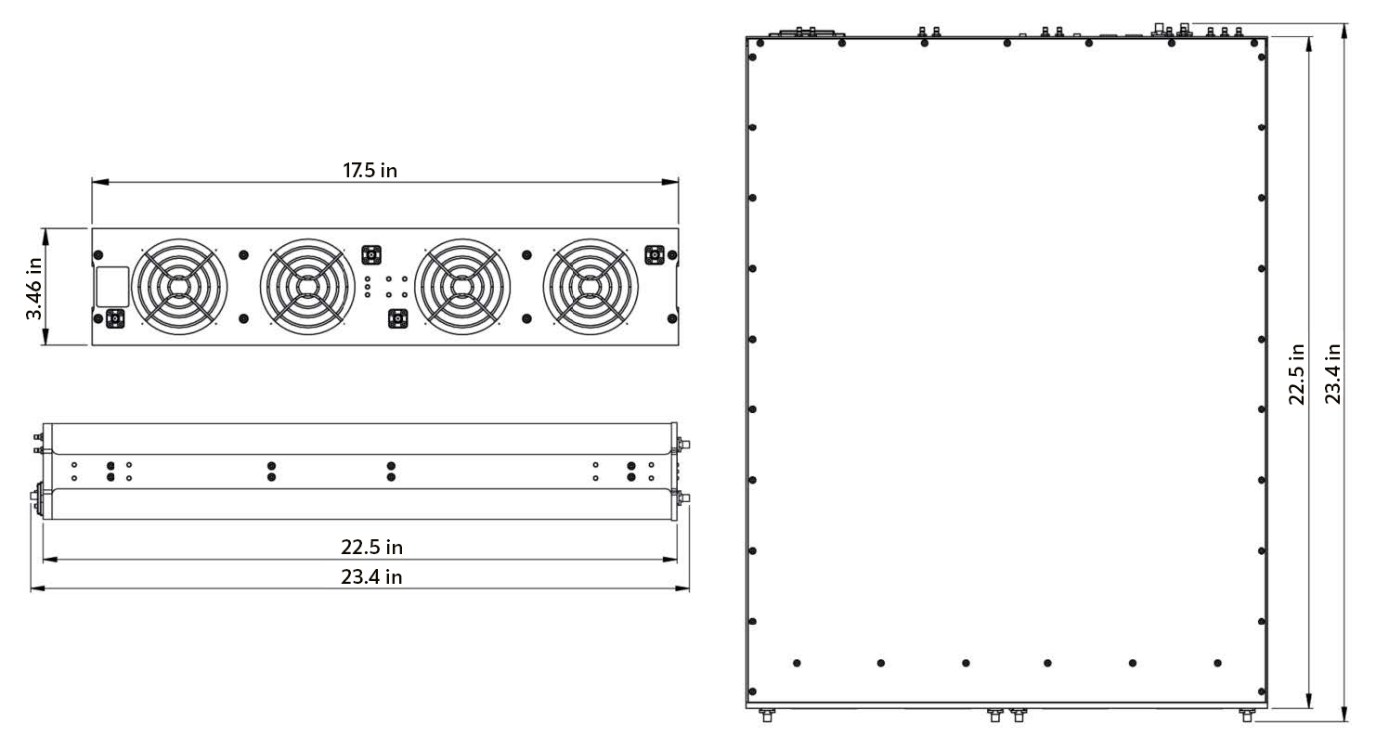
| Including connectors | W x L x H = 17.5 x 23.4 x 3.5 in [444 x 594 x 88 mm], ≤39.7 lbs [18 kg] |
14Ordering Information
| Host Model No. | Product | Description |
|---|---|---|
| 871 | 871-12 | High performance signal generator up to 12.75 GHz |
| 871 | 871-20 | High performance signal generator up to 20 GHz |
| 871 | 871-40 | High performance signal generator up to 40 GHz |
| 871 | 871-50 | High performance signal generator up to 51 GHz |
| 871-XX-X | 871-XX-1 | 1-channel signal generator, 19" 1U rack-mount module |
| 871-XX-X | 871-XX-2 | 2-channel signal generator, 19" 1U rack-mount module |
| 871-XX-X | 871-XX-3 | 3-channel signal generator, 19" 1U rack-mount module |
| 871-XX-X | 871-XX-4 | 4-channel signal generator, 19" 1U rack-mount module |
| 871-XX-X | Option FS | Ultra-fast frequency/power switching |
| 871-XX-X | Option 1K | Frequency range extension up to 1 kHz |
| 871-XX-X | Option LN | Enhanced close in phase noise and frequency stability |
| 871-XX-X | Option LN+ | Option LN with improved long term frequency stability |
| 871-XX-X | Option VREF | External reference frequency in range 1 to 250 MHz |
| 871-XX-X | Option MOD | Analog modulations |
| 871-XX-X | Option PULSE | Pulse modulation |
| 871-XX-X | Option PE2-12/20/40 | Mechanical step attenuator down to -120 dBm for 12, 20 and 40 GHz models |
| 871-XX-X | Option PE2-50 | Mechanical step attenuator down to -110 dBm for 51 GHz models |
| 871-XX-X | Option FLASH | MicroSD card slot for removable SD memory |
| 871-XX-X | Option GBIB | GPIB interface |
15General Characteristics
Remote programming interfaces:
- Gbit Ethernet interface
- USB 2.0 device
- GPIB (IEEE-488.2,1987) with listen and talk (Option GPIB)
- Control Language SCPI Version 1999.0
Power requirements: 100 - 240 VAC, 50 or 60 Hz, 280W maximum (80W + 50W per channel)
Environmental: Levels similar to MIL-PRF-28800F Class ¾

Safety/EMC: comply with applicable Safety and EMC regulations and directives.
Weight:
Multi-Channel: 19" 2U HI enclosure 39.7 lbs. (18 kg)
Single-Channel: desktop enclosure ≤22 lbs. (10 kg)
Dimensions:
Multi-Channel: 19" 2U HI enclosure W x L x H = 17.5 x 23.4 x 3.5 in [444 x 594 x 88 mm]
Single-Channel: Desktop enclosure W x L x H = 9.1 x 15.5 x 3.8 in [232 x 393 x 96.75 mm]
Cited in peer-reviewed research
Independent publications citing this instrument, indexed by Bioz. Citation counts and Bioz Stars ratings are shown live and update as new papers are indexed.